
BS Textile Design
This program is built for the AI era, where textile designers must use creativity, pattern development, digital tools, AI-assisted concepts, and market understanding to create relevant designs. From the first semester, students…
Overview
This program is built for the AI era, where textile designers must use creativity, pattern development, digital tools, AI-assisted concepts, and market understanding to create relevant designs. From the first semester, students learn Applied AI and Prompt Engineering, Content Writing, Visual Content Creation, Digital Marketing, and No-Code Web and Mobile App Development using GitHub Copilot. This means students do not wait until graduation to become useful. After the first semester, they can create textile visuals, design content, portfolio pages, product stories, social media posts, and support textile brands online. This is not just a Textile Design degree. It is a university-supported pathway to become a future-ready textile designer, visual creator, product storyteller, and design entrepreneur. Program Introduction FAQs
Key Features
- Comprehensive CurriculumA BS in Textile Design covers foundational courses in textile design, drawing, color theory, and design principles in the first year, followed by intermediate studies in textile materials, weaving, print design, and digital design. Advanced techniques such as knitwear, sustainable practices, and collection development are introduced in the third year. The final year focuses on specialization with projects, internships, and professional development. The curriculum integrates workshops, field trips, guest lectures, and study abroad opportunities, equipping students with creative, technical, and industry skills for careers in textile and fashion design.
- Hands-On ExperienceA BS in Textile Design offers extensive hands-on experience through practical courses and projects. From the first year, students engage in drawing, illustration, and fabric manipulation. Intermediate courses include weaving, print design, and textile dyeing, often conducted in well-equipped labs and studios. Advanced years focus on creating knitwear, experimental textiles, and sustainable designs, with students developing their own collections. Internships, industry projects, and workshops with professionals provide real-world experience, while final year projects and exhibitions showcase their skills. This practical approach ensures students are industry-ready with a comprehensive portfolio upon graduation.
- Industry-Relevant SkillsA BS in Textile Design equips students with industry-relevant skills such as proficiency in textile design software (e.g., Adobe Photoshop, Illustrator, CAD), an understanding of textile materials and fabric construction, and expertise in various textile techniques like weaving, print design, and dyeing. Students develop creative design and illustration abilities, knowledge of fashion trends and market demands, and practical experience through internships and industry projects. They also learn about textile testing and quality control, sustainable practices, marketing and merchandising, and professional portfolio development, preparing them for diverse roles in the textile and fashion industry.
- Experienced FacultyOur faculty comprises highly qualified professionals with extensive experience in academia and the fashion industry. They bring valuable insights and mentor ship to the classroom, fostering a rich learning environment.
- Research OpportunitiesStudents in textile design programs have numerous research opportunities that enhance their learning and professional development. They can engage in undergraduate and graduate research projects, independent studies, and assistantship, often focusing on areas like sustainable textiles, smart textiles, and traditional techniques. Collaborations with industry and interdisciplinary research further expand their horizons. Opportunities also exist in cultural and historical textile studies, with projects often supported by grants and scholarships. Participation in design competitions and exhibitions allows students to showcase their work, fostering innovation and industry connections. Faculty mentor ship and active involvement in research groups and labs provide valuable hands-on experience and academic growth.
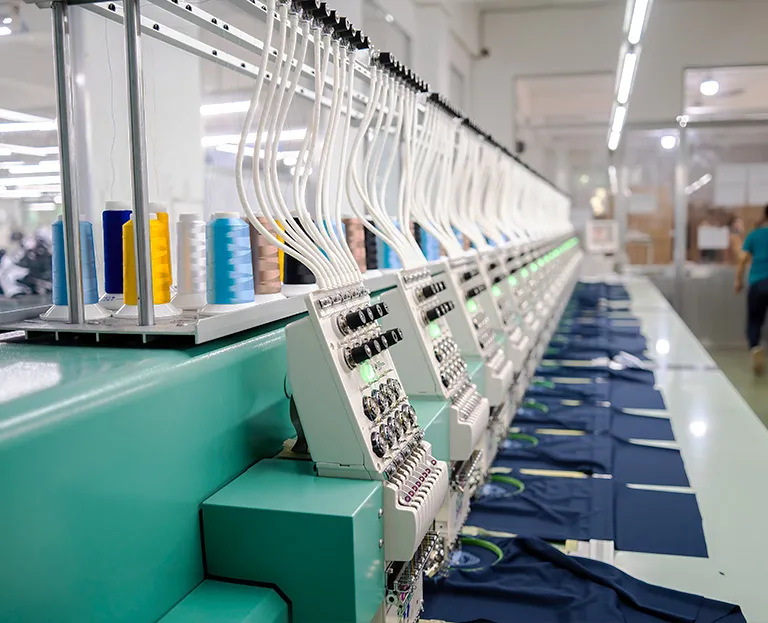
- State-of-the-Art FacilitiesA BS in Textile Design program often provides access to state-of-the-art facilities that enhance learning and creativity. These facilities typically include advanced textile labs equipped with modern weaving looms, knitting machines, and digital printers for fabric design. Students have access to computer labs with the latest design software for CAD, 3D modeling, and digital textile printing. Dyeing and finishing labs with sophisticated equipment allow for experimentation with colors and textures. Additionally, design studios and workshops offer space for hands-on projects, while resource centers and libraries provide extensive collections of textile samples, industry publications, and research materials, all contributing to a comprehensive and immersive educational experience.
- Strong Industry LinkagesWe have established strong connections with leading tech companies, providing students with internship opportunities, industry projects, and exposure to real-world applications of their studies.
- Career SupportOur dedicated career services team offers guidance on CV writing, interview preparation, and job placements. We are committed to ensuring that our graduates are well-prepared to enter the workforce with confidence.
Is BS Textile Design Right for You?
This program may suit you if you enjoy creating, observing, experimenting and turning ideas into visual or physical outcomes. It is a strong fit for students who want to develop both creative thinking and professional discipline through studio work, critique, projects and portfolio development.
You may enjoy this program if you:
- Enjoy drawing, designing, making or visual problem-solving.
- Like experimenting with ideas, materials or digital tools.
- Want to build a professional portfolio during your degree.
- Are open to feedback and improving your work through critique.
- Want creative career, freelance or entrepreneurial possibilities.
You do not need to arrive with a finished professional portfolio. Your skills develop through guided studio learning and practice.
Courses by Semester
Tap a semester to see its courses.
Semester 1
| Subject | Course Type |
|---|---|
| Writing & Reading for Impact | General Education |
| Creative Designing with AI Tools | General Education |
| AI Integrated ICT | General Education |
| AI Powered Functional English | General Education |
| AI Embedded Entrepreneurship | General Education |
| Design Foundation Studio for Textiles | Major/Core |
| Basic Drawing for Textile Design | Major/Core |
Semester 2
| Subject | Course Type |
|---|---|
| Optimizing Health & Nutrition with AI | General Education |
| Data Analysis for Informed Decision-Making | General Education |
| Islamic Studies / Ethics and AI Morality | General Education |
| Understanding Human Psychology With AI | General Education |
| Textile Basics | Major/Core |
| Textile Fibers and Materials | Major/Core |
Semester 3
| Subject | Course Type |
|---|---|
| Mathematical Problem Solving with AI | General Education |
| Civic and Community Engagement | General Education |
| Fehm-e-Quran I | General Education |
| Pakistan: Ideology & Constitution | General Education |
| Surface Design I | Major/Core |
| Weave Design I | Major/Core |
| History of Textile, Fashion and Culture | Major/Core |
Semester 4
| Subject | Course Type |
|---|---|
| Fehm-e-Quran II | General Education |
| Pakistan Studies | General Education |
| Surface Design II | Major/Core |
| Weave Design II | Major/Core |
| Digital Textiles | Major/Core |
| Textile Design Studio | Major/Core |
Semester 5
| Subject | Course Type |
|---|---|
| Digital Textile Printing | Major/Core |
| Textile Printing | Major/Core |
| Basics of Sewing and Product Construction | Major/Core |
| Color Theory and Application | Interdisciplinary/Allied |
Semester 6
| Subject | Course Type |
|---|---|
| Digital Textiles II: AI and 3D Visualization | Major/Core |
| Knit Design I | Major/Core |
| Textile Product Design I | Major/Core |
| Textile Calculations and Production Planning | Major/Core |
| Industrial Practice and Supply Chain | Interdisciplinary/Allied |
| Summer Semester | |
| Field Experience / Internship | Field Experience |
Semester 7
| Subject | Course Type |
|---|---|
| Textile Design Research and Development | Major/Core |
| Advanced Surface and Smart Textiles | Major/Elective |
| Textile Product Design II | Major/Core |
| Knit Design II | Major/Core |
| Sustainable Textile Materials | Interdisciplinary/Allied |
Semester 8
| Subject | Course Type |
|---|---|
| Textile Design Thesis | Major/Core |
| Textile Design Product Development | Major/Core |
| Portfolio Presentation | Major/Core |
| Professional Practices and Brand Development | Interdisciplinary/Allied |
| Roadmap FAQs |
Fees & Scholarship
| Tuition / semester | Rs 200,000 |
| Admission and Registration Fee | Rs 30,000 (one-time) |
The Admission and Registration Fee is a one-time charge and becomes payable only after you receive your provisional admission offer. Nothing is payable to submit an application.
What Could I Pay Per Semester?
Choose the option that best matches your plan.
Check My Eligibility for Financial Support
Scholarship & Study Loan
- Work-Based Scholarship available
- Study Loan available
Work-Based Scholarship (WBS): work 10 hours/week online for 40% off (payable Rs 120,000/sem) or 5 hours/week for 20% off. Earned by working — not by marks.
Study Loan: an additional 40% study loan brings the payable amount to ~Rs 72,000/semester. Repaid after the student starts earning, in 6 instalments under a signed undertaking.
Admission Requirements
Applicants must have completed 12 years of education through HSSC, A-Level, or an IBCC-recognized equivalent qualification. Where the provided program information does not specify minimum marks, entry test, or interview requirements, no percentage, test, or interview is added. Admission remains subject to University policy, document verification, seat availability, equivalence requirements where applicable, and official admission-system confirmation.
Duration, Credit Hours, and Program Structure
The Bachelor of Textile Design is a 4 years / 8 regular semesters undergraduate degree with 127 credit hours. The structure includes 34 credit hours of General Education, 72 credit hours of Major/Core textile design courses, 12 credit hours of Interdisciplinary/Allied learning, 3 credit hours of Field Experience/Internship, and 6 credit hours of Textile Design Thesis / capstone-type studio work. The roadmap is designed to build creative confidence, digital competence, industry exposure, portfolio strength, professional discipline, and practical readiness for modern design environments.
Exciting Career Opportunities
Graduates of textile design programs can pursue diverse and exciting career paths in various industries. Opportunities include roles as textile designers, fashion designers, and interior textile designers, creating unique patterns and fabrics for fashion, home decor, and more. They can work as textile technologists, product developers, and quality control managers in manufacturing and research. Graduates may also become sustainability consultants, textile buyers, or freelance designers, offering their expertise to various clients and companies. Additionally, careers in costume design for theater and film, as well as entrepreneurial ventures in starting their own textile businesses, are viable paths. These roles leverage skills in creativity, technical proficiency, trend analysis, and sustainable practices.
Textile visual and pattern concepts
Product stories for textile brands
Portfolio and catalog development
Social media textile marketing
Textile and print design roles
Career FAQs
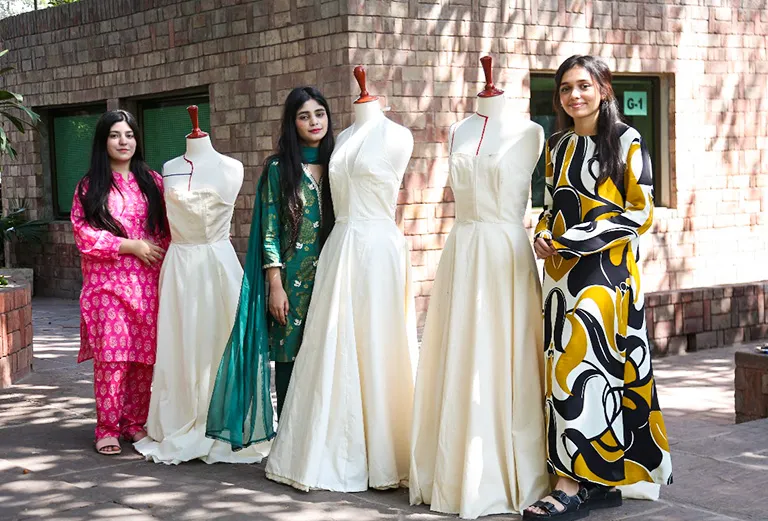
What Makes BTD A great Experience at University of South Asia?
Interdisciplinary Learning
Our BTD program encourages interdisciplinary learning, allowing students to explore areas such as business, engineering, and digital arts. This holistic approach broadens their perspective and enhances their problem-solving abilities.
Entrepreneurial Focus
We nurture entrepreneurial skills by offering courses and workshops on startup development, innovation, and business management. Students are encouraged to create their own collections and labels.
Global Perspective
We offer international exchange programs and collaborations with global institutions, providing students with opportunities to study abroad and gain a global perspective on textile industry.
Community Engagement:
Our students are actively involved in community service and outreach programs, applying their skills to solve local challenges and make a positive impact on society.
Lifelong Learning
We instill a mindset of lifelong learning, encouraging students to stay updated with technological advancements and continuously enhance their skills throughout their careers.
Student Success Stories
He is a fashion stylist, the owner of the clothing brand Kay By Khans, a PR publicist, and an event planner. Notably, he is recognized as Pakistan’s first and youngest male fashion influencer, pioneering the trend of bloggers and influencers in the country. Reflecting on his journey, Murrad credits his success to the unwavering support of his university, friends, and family. He continues to innovate and inspire within the fashion industry, with plans to expand his influence and reach even further.
Murrad Rahim Khan
I am Abdul Hasseb Tariq, a visionary textile designer, who graduated with a Bachelor's degree in Textile Designing from the University of South Asia. My final year thesis introduced a remarkable fabric made from corn husk. Now, at the helm of my own business, i offer comprehensive services in textile and fashion design, showcasing my innovative approach and commitment to excellence.
Abdul Hasseb Tariq
I am EshaTajamal and I have done my Bachelor in textiles designing from Univeristy of south Asia Currently I am doing job at Shades by Abeeha usman as a production manager and also working with Fashion lifestyle EXpo as a Event coordinator And start working at Nida Azwer's Sales Department.
Esha Tajamal
I am Hafiza Anosh Noor, a visionary textile designer with a Bachelor's degree in Textile Designing from the University of South Asia. My thesis, "Motifs Through the Ages," examines the evolution and reinterpretation of textile motifs using traditional handwoven techniques, inspired by Lahore's architecture. Currently, I work as a textile designer for a reputable brand in the industry.
Hafiza Anosh Noor
Wajeeha Hassan, Textile Design Student of University of South Asia and work as Textile Designer at Nimrah Khokhar Design Studio and also work as an event coordinator with fashion lifestyle expo,confident in my abilities to excel in the industry thanks to my university education.
Wajeeha Hassan
Frequently Asked Questions
Why is Textile Design important in the AI era?
Textile Design is important because creative work now depends on a strong mix of human imagination, digital tools, audience insight, market awareness, and responsible AI use. Students who can combine design thinking with technology can prepare stronger portfolios and respond better to modern studio, brand, freelance, and entrepreneurial opportunities.
What will I learn in the first semester?
In the first semester, students study writing and reading, creative designing with AI tools, AI integrated ICT, AI powered functional English, AI embedded entrepreneurship, and the first major design foundation course. This gives them academic confidence, digital fluency, communication ability, and an early creative foundation.
Can students start building practical skills early?
Yes. From the first semester, students can start building beginner-level portfolio material such as textile visuals, pattern concept boards, product content, portfolio pages, catalog layouts, and social media support. These activities are learning and portfolio-building opportunities, not guaranteed income or clients.
How is this program different from a traditional design degree?
This program combines studio learning with AI-first support, digital tools, portfolio development, practical assignments, entrepreneurship exposure, and market-oriented design tasks. Students are guided to learn, practice, improve, present, and build professional confidence throughout the degree.
What can students start doing after the first semester?
Students can start preparing beginner-level work such as textile visuals, pattern concept boards, product content, portfolio pages, catalog layouts, and social media support. These are safe learning and portfolio activities that help students practice skills while building confidence.
Is freelancing or portfolio-building possible in this field?
Yes, portfolio-building is strongly relevant in design programs. Freelancing may be explored gradually through ethical, supervised, and beginner-appropriate work, but success depends on skill quality, consistency, market conditions, communication, and professional conduct.
What roles can graduates pursue after completing the program?
Graduates may pursue pathways such as Textile Designer, Surface Pattern Designer, Print Design Associate, Textile Product Developer, Merchandising and Brand Support Professional, Textile Design Entrepreneur. Final employment depends on portfolio quality, skills, experience, market conditions, and employer requirements.
What makes this program market-relevant?
The program connects Textile Design with digital tools, AI-supported workflows, portfolio development, client-oriented communication, and practical studio tasks. This helps students prepare for changing creative industries and modern design practice.
Who can apply for this program?
Applicants who have completed 12 years of education through HSSC, A-Level, or an IBCC-recognized equivalent qualification may apply, subject to University rules and document verification.
Is any specific percentage required?
The provided program information does not specify a minimum percentage. Therefore, eligibility is stated professionally as completion of 12 years of education, with admission subject to official University confirmation.
Is an entry test or interview required?
No entry test or interview is mentioned in the provided program information. If the University later approves any aptitude, portfolio, or interview process for design admissions, it will be communicated through the official admission system.
Can awaiting-result students apply?
Awaiting-result students may apply according to University rules. Final admission confirmation depends on submission and verification of the required result, equivalence where applicable, and fulfillment of admission conditions.
Is equivalence required for O/A-Level or foreign qualifications?
Yes. Applicants applying with O/A-Level or foreign qualifications must provide equivalence from the relevant authority according to University and regulatory requirements.
What is the duration of the program?
The program is normally completed in 4 years / 8 regular semesters.
How many credit hours are included?
The program roadmap includes 127 credit hours.
What kinds of courses are included?
Students study General Education courses, major/core design courses, interdisciplinary/allied learning, field experience or internship, and final thesis/capstone-type portfolio work where included in the roadmap.
Does the program include practical work?
Yes. The program includes studio courses, digital assignments, portfolio tasks, critique, presentation, field exposure, and final project or thesis work according to the roadmap.
What is the semester fee for Bachelor of Textile Design?
The current program semester fee is PKR 100,000 per semester for Fashion and other programs under Faculty of Art and Fashion Design, subject to official admission-system confirmation and University policy.
BS Textile Design — Your Decision at a Glance
- Eligibility
- Intermediate, A-Levels or equivalent 12-year qualification with minimum 40% marks
- Duration
- 4 years
- Semesters
- 8
- Tuition Fee
- Rs 200,000 per semester
- Financial Support
- 40% Work-Based Scholarship and Study Loan available under University policy
- Intake
- Fall 2026 Admissions Open
- Recognition / Accreditation
- Offered by an HEC-recognised, chartered university
Related Programs
Bachelor of Architecture
- Work-Based Scholarship available
- Study Loan available
Bachelor of Building and Construction
- Work-Based Scholarship available
- Study Loan available
BS Fashion Design
- Work-Based Scholarship available
- Study Loan available