
BS Human Nutrition & Dietetics
This program is built for the AI era, where nutrition professionals must understand diet, health, lifestyle, behavior, food systems, and AI-supported wellness planning. From the first semester, students learn Applied AI and…
Overview
This program is built for the AI era, where nutrition professionals must understand diet, health, lifestyle, behavior, food systems, and AI-supported wellness planning. From the first semester, students learn Applied AI and Prompt Engineering, Content Writing, Visual Content Creation, Digital Marketing, and No-Code Web and Mobile App Development using GitHub Copilot. This means students can begin earning safely through nutrition awareness content, meal-planning visuals, wellness blogs, clinic websites, social media pages, and digital campaigns for health businesses. This is not just a nutrition degree. It is a university-supported pathway to become a future-ready nutrition professional, wellness educator, digital health creator, and nutrition entrepreneur. Program Introduction FAQs
Key Features
- Comprehensive CurriculumOur BS HND program features a robust curriculum encompassing essential areas in both healthcare and industry. Students will study human nutrition, therapeutic dietetics, sports nutrition, and supervised clinical practices. Additionally, they will explore food safety and quality management, food marketing, and product development, ensuring they receive a comprehensive education that equips them with the expertise needed to excel in various professional settings.
- Supervised Clinical PracticesWe emphasize practical learning through lab sessions, projects, and internships. Students gain hands-on experience in hospitals, nutrition assessment camps, and counseling sessions, preparing them to tackle real-world challenges in the field of nutrition and dietetics.
- Industry-Relevant Skills and Strong Industry LinkagesOur program is designed in collaboration with industry and healthcare experts to ensure the skills and knowledge imparted are aligned with current demands. Partnerships with eminent hospitals and the Pakistan Food Authority offer students invaluable internship opportunities, involvement in industry projects, and exposure to real-world applications of their studies. Students also acquire skills in digital marketing and AI technologies, preparing them to excel in the modern landscape of nutrition and dietetics.
- Clinical and Community EngagementStudents have opportunities to engage in clinical settings and community nutrition programs. This exposure helps them understand the practical aspects of dietetics and nutrition in various contexts, from hospitals to community health initiatives.
- Professional Development and Certification SupportThe University of South Asia supports students in their professional development, including preparation for certification exams and membership in professional organizations such as the Academy of Nutrition and Dietetics and Pakistan Nutrition & Dietetic Society. This support enhances their career prospects and professional recognition.
- Focus on Communication and ProfessionalismIn addition to technical expertise, the program emphasizes the development of essential soft skills such as patient communication, teamwork, ethical decision-making, critical thinking, and leadership. These skills are cultivated through interactive sessions, case studies, patient simulations, and multidisciplinary team collaborations.
- BS Human Nutrition & Dietetics (BS HND) Program Structure:The BS HND program is of 4-years duration, 8 regular semesters, and consisting of 135-144 credit hours after completing twelve years of higher secondary school certificate or equivalent.
Is BS Human Nutrition & Dietetics Right for You?
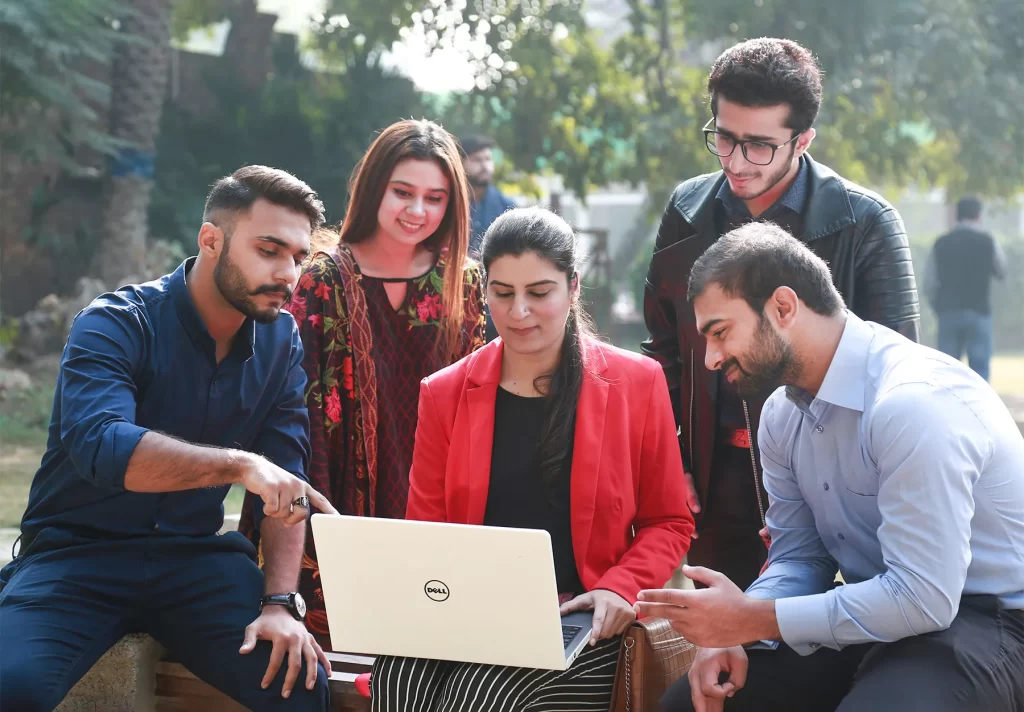
This program may suit you if you are interested in health, science and improving people’s wellbeing through responsible professional practice. It is a strong fit for students who can work carefully, follow procedures, communicate respectfully and learn through both theory and supervised practical work.
You may enjoy this program if you:
- Are interested in health, science and human wellbeing.
- Can work carefully and pay attention to detail.
- Want practical learning alongside academic knowledge.
- Are comfortable communicating with people professionally.
- Want to develop skills for health-related careers or further study.
Professional practice may be subject to the requirements of the relevant regulatory or professional body.
Courses by Semester
Tap a semester to see its courses.
Semester 1
| Subject | Course Type |
|---|---|
| Writing & Reading for Impact | General Education |
| Creative Designing with AI Tools | General Education |
| AI Integrated ICT | General Education |
| AI Powered Functional English | General Education |
| AI Embedded Entrepreneurship | General Education |
| Fundamentals of Human Nutrition and Dietetics | Mandatory Core / Major |
| Human Anatomy | Interdisciplinary / Allied |
Semester 2
| Subject | Course Type |
|---|---|
| Optimizing Health & Nutrition with AI | General Education |
| Data Analysis for Informed Decision-Making | General Education |
| Islamic Studies / Ethics and AI Morality | General Education |
| Understanding Human Psychology With AI | General Education |
| Introduction to Food Science and Technology | Mandatory Core / Major |
| Macro and Micro Nutrients | Mandatory Core / Major |
| Human Physiology | Interdisciplinary / Allied |
Semester 3
| Subject | Course Type |
|---|---|
| Mathematical Problem Solving with AI | General Education |
| Civic and Community Engagement | General Education |
| Fehm-e-Quran I | General Education |
| Pakistan: Ideology & Constitution | General Education |
| Food Microbiology and Biotechnology | Mandatory Core / Major |
| Clinical Biochemistry | Interdisciplinary / Allied |
| General Pathology | Interdisciplinary / Allied |
Semester 4
| Subject | Course Type |
|---|---|
| Fehm-e-Quran II | General Education |
| Pakistan Studies | General Education |
| Food Safety & Quality Management | Mandatory Core / Major |
| Functional Foods & Nutraceuticals | Mandatory Core / Major |
| Fundamentals of Food Systems | Mandatory Core / Major |
| Food Service Management | Mandatory Core / Major |
| Analytical Techniques in Food and Nutrition | Mandatory Core / Major |
Semester 5
| Subject | Course Type |
|---|---|
| Community and Public Health Nutrition | Mandatory Core / Major |
| Nutrition through Life Cycle | Mandatory Core / Major |
| Meal Planning and Management | Mandatory Core / Major |
| Nutritional Assessment | Mandatory Core / Major |
| Dietetics I | Mandatory Core / Major |
| AI in Food and Nutrition | Mandatory Core / Major |
Semester 6
| Subject | Course Type |
|---|---|
| Food & Drug Laws and Regulations | Mandatory Core / Major |
| Food Product Development | Mandatory Core / Major |
| Dietetics II | Mandatory Core / Major |
| Supervised Practicum I | Mandatory Core / Major |
| Research Methods in Food and Nutrition | Mandatory Core / Major |
| Food & Nutrition Entrepreneurship (Major Elective | General HND Pathway) |
| Sports Nutrition & Exercise (Major Elective | General HND Pathway) |
Semester 7
| Subject | Course Type |
|---|---|
| Food and Nutrition Certifications | Mandatory Core / Major |
| Supervised Practicum II | Mandatory Core / Major |
| Nutrition Education & Counseling | Mandatory Core / Major |
| Nutritional Epidemiology | Mandatory Core / Major |
| Medical Nutrition Therapy I (Major Elective | General HND Pathway) |
| Maternal & Child Nutrition (Major Elective | General HND Pathway) |
Semester 8
| Subject | Course Type |
|---|---|
| Food and Nutrition Policies | Mandatory Core / Major |
| Medical Nutrition Therapy II (Major Elective | General HND Pathway) |
| Nutrition Practices in Critical Care (Major Elective | General HND Pathway) |
| Capstone Project | Capstone Project |
| Field Experience / Internship | Field Experience / Internship |
| Roadmap FAQs |
Fees & Scholarship
| Tuition / semester | Rs 200,000 |
| Admission and Registration Fee | Rs 30,000 (one-time) |
The Admission and Registration Fee is a one-time charge and becomes payable only after you receive your provisional admission offer. Nothing is payable to submit an application.
What Could I Pay Per Semester?
Choose the option that best matches your plan.
Check My Eligibility for Financial Support
Scholarship & Study Loan
- Work-Based Scholarship available
- Study Loan available
Work-Based Scholarship (WBS): work 10 hours/week online for 40% off (payable Rs 120,000/sem) or 5 hours/week for 20% off. Earned by working — not by marks.
Study Loan: an additional 40% study loan brings the payable amount to ~Rs 72,000/semester. Repaid after the student starts earning, in 6 instalments under a signed undertaking.
Admission Requirements
2.1. Duration, Credit Hours, and Program Structure
Applicants should have completed Higher Secondary School Certificate, A-Levels, or an IBCC-recognized equivalent qualification involving at least 12 years of schooling, with an eligible background such as FSc Pre-Medical, FSc Pre-Agri, FSc Pre-Engineering, FSc with food-related subjects, A-Levels with relevant equivalence, or DAE in food-related subjects.
2.1. Duration, Credit Hours & Program Structure
The BS Human Nutrition & Dietetics program is a four-year undergraduate degree offered across eight regular semesters with a total of 140 credit hours. Its structure includes 34 credit hours of General Education, 88 credit hours of discipline-related or major courses, including 70 credit hours of compulsory major courses and 18 credit hours of selected major electives, 12 credit hours of interdisciplinary or allied courses, 3 credit hours of field experience/internship, and 3 credit hours of capstone project. The normal duration is four years, while the maximum duration is six years.
Career Opportunities
Nutrition content and wellness posts
Diet awareness visual creation
Clinic and wellness website support
Hospital and wellness center roles
Food and nutrition education careers
Career Opportunities FAQs
Program Outcomes
Program Learning Outcomes (PLOs)
PLO 1: Enhance Analytical and Reasoning Skills:
Develop students' ability to critically analyze nutrition-related data and research findings, essential for effective assessment and intervention in nutrition science.
PLO 2: Train in Evidence-Based Nutrition Solutions:
Provide hands-on experience in developing and implementing evidence-based dietary plans to address modern health challenges.
PLO 3: Promote Excellence in Communication:
Focus on developing students' communication skills to effectively engage with clients, colleagues, and the broader community.
PLO 4: Cultivate Professionalism:
Instill professionalism and ethical conduct in students, preparing them to uphold professional standards in practice.
What Makes Bachelor of Nutrition and Dietetics (BND) a great Experience at University of South Asia?
Interdisciplinary Curriculum
The program adopts an interdisciplinary approach, integrating knowledge from various fields such as medicine, public health, and food science. This comprehensive perspective helps students understand the multifaceted nature of nutrition and dietetics.
Modern Facilities and Resources
The University of South Asia offers state-of-the-art facilities, including well-equipped laboratories, modern classrooms, and access to the latest research tools and technologies. These resources support a conducive learning environment and facilitate advanced research and practical training.
Clinical and Community Engagement
Students have opportunities to engage in clinical settings and community nutrition programs. This exposure helps them understand the practical aspects of dietetics and nutrition in various contexts, from hospitals to community health initiatives.
Global Perspectives
The program incorporates global perspectives on nutrition and dietetics, exposing students to international dietary guidelines, global health issues, and diverse dietary practices. This prepares them for careers in a globalized world.
Student Success Stories
Ms. Tabinda Jabeen completed her degree in Nutrition Sciences in 2018, graduating with distinction for her outstanding academic performance. Following the completion of her studies, she commenced her professional journey at Shalamar Hospital Lahore, where she had the opportunity to enhance her clinical knowledge. Motivated by her interest in research, she has embarked on a doctoral program at Food Mood Centre, Deakin University, Australia.
Ms. Tabinda Jabeen
Minahil Amin was awarded the accolade of Best Graduate of the University (Quaid e Azam Gold Medal), 2020. She went on to pursue her Master's in Advanced Food Safety from Queen's University Belfast, UK. Minahil's interest for research and teaching in the field of nutrition and food safety compelled her to gain dexterity in the field through multiple internships in hospitals and banquet kitchens. She also served as a Lecturer in the Department of Food and Nutrition at University of South Asia. Minahil is determined to continue her academic journey and wishes to pursue a PhD in the field of Food Science.
Ms. Minahil Ameen
During his academic tenure, Mr. Victor served as the President of the Continuous Professional Development Society and the Health Sciences Society at the University of South Asia. He began his professional journey at Kishwar Sultana Hospital and, in the same year, founded his own company, SVNutritions.pk. Mr. Victor has a profound interest in Oncology Nutrition and has earned certifications in nutrition, oncology, and pediatrics. He is a registered and licensed dietitian with the Health and Care Professions Council (HCPC) in the UK. In addition, he is pursuing a Master's degree in Cancer Biology and Therapeutics at the University of Sheffield, UK.
Mr. Sam Victor
Mobina Naqvi Quality Assurance Specialist at Clinical Trial Network LLC, (Texas, USA) is an alumnus of the University of South Asia. In her current role, she conducts internal audits to ensure compliance with policies and procedures, reviews clinical study documents, and provides administrative support. Previously, she served as Research Associate at Mayo Hospital (Project of Aga Khan University) and Services Hospital (Project of Imperial College, London).
Mobina Naqvi
Mubashir Zaheer, a proud alumnus, has excelled as a mobile application developer, driven by a passion for technology. Mastering various programming languages and frameworks, he achieved a breakthrough with a high-performance app that garnered thousands of downloads and elevated user experience. This success propelled his career, enabling him to collaborate with top companies on innovative projects. Today, he continues to create cutting-edge digital solutions.
Mubashir Zaheer
Frequently Asked Questions
What is BS Human Nutrition & Dietetics?
BS Human Nutrition & Dietetics is a four-year undergraduate program that teaches nutrition science, dietetics, food systems, public health nutrition, clinical nutrition, counseling, research, supervised practice, internship, and capstone work. It is designed for students who want to understand how food, nutrients, lifestyle, disease, and communities influence health and wellbeing.
Why is this program important in the AI era?
Nutrition work is becoming more data-informed and technology-supported. Students learn to use digital tools, food databases, spreadsheets, research sources, AI-supported learning tools, and nutrition communication platforms responsibly while keeping scientific evidence, ethics, and human judgment at the center of professional decision-making.
Can students begin building practical capability before graduation?
Yes. Students can gradually build safe academic portfolios through nutrition awareness content, food label analysis, healthy meal planning, community surveys, wellness education material, supervised case activities, and capstone work. These activities support confidence, but students must avoid unauthorized medical claims or unsupervised clinical advice.
Is the program only about diet charts?
No. The program covers a much broader pathway including human anatomy, physiology, food science, food safety, public health nutrition, dietetics, nutritional assessment, food product development, nutrition counseling, epidemiology, medical nutrition therapy, practicum, internship, and research-based learning.
What can students start doing during the early semesters?
Students can begin creating nutrition awareness posts, wellness visuals, simple food-label analyses, healthy recipe comparisons, community survey summaries, and basic websites or digital content for academic portfolios. These should be educational and evidence-based, not medical prescriptions or guaranteed diet plans.
Where can graduates work after completing the degree?
Graduates may explore opportunities in hospitals, wellness centers, food companies, nutrition education settings, public health programs, community organizations, food service units, fitness and wellness environments, research support roles, and nutrition-related entrepreneurial work, subject to employer requirements and applicable professional rules.
Can this degree support entrepreneurship?
Yes. The roadmap includes entrepreneurship, food product development, nutrition education, food service, food safety, counseling, and capstone learning. These areas can support responsible ventures in wellness education, healthy food products, food-service support, meal-planning education, and nutrition communication, subject to law, ethics, and professional limits.
What is the semester fee for BS Human Nutrition & Dietetics?
The current program semester fee is PKR 100,000 per semester for Nutrition and other Allied Health Science programs, subject to official admission system confirmation and University policy.
Can students apply for installments or study loan support?
Students may apply for installment flexibility and up to 50% study loan support subject to University approval. Approved students may be required to complete assigned University online or project work and repay according to the approved schedule.
Is financial support automatic?
No. Scholarship, installment, discount, and loan support are not automatic. Students must apply, provide required documents, meet eligibility conditions, and receive approval according to University policy.
How are refunds handled?
Refunds, if applicable, are processed according to University refund policy and the approved refund timeline. Admission or application fee is normally non-refundable unless a specific rule states otherwise.
What academic source is used for this program?
The roadmap is based on the HEC Curriculum for Human Nutrition & Dietetics 2025, the HEC Undergraduate Education Policy, the University roadmap template, and the Fall 2026 fee and scholarship source.
Is the program recognized through the University?
Yes. The program is positioned within the University of South Asia academic structure, and the University is a chartered and HEC-recognized institution. Final program offering remains subject to University statutory approval and applicable rules.
What happens if any council or authority issues stricter requirements?
If any relevant authority prescribes stricter academic, professional, or regulatory requirements in the future, the University will apply those requirements through the proper academic and statutory process where applicable.
How will students learn in this program?
Students learn through classroom teaching, food and nutrition labs, supervised practicum, case discussions, counseling practice, community work, research tasks, internship, capstone work, LMS activities, and responsible use of AI-supported learning tools.
Does AI replace teachers or clinical judgment?
No. AI tools may support revision, drafting, feedback, data handling, and learning practice, but faculty supervision, scientific evidence, ethics, patient safety, and professional judgment remain central throughout the program.
Will timetable planning be flexible?
The University aims to offer section-based timetable flexibility where possible. Students must choose available sections carefully, meet prerequisites, clear dues for enrollment, and understand that lab, practicum, and field requirements may affect weekly attendance.
Why are General Education courses fixed in the roadmap?
The University follows a fixed undergraduate General Education sequence to build communication, digital confidence, ethics, civic awareness, quantitative reasoning, and broad learning before students move into advanced professional courses.
BS Human Nutrition & Dietetics — Your Decision at a Glance
- Eligibility
- F.Sc. Pre-Medical, A-Levels or equivalent 12-year qualification with minimum 40% marks
- Duration
- 4 years
- Semesters
- 8
- Tuition Fee
- Rs 200,000 per semester
- Financial Support
- 40% Work-Based Scholarship and Study Loan available under University policy
- Intake
- Fall 2026 Admissions Open
- Recognition / Accreditation
- Listed as compliant by the Allied Health Professionals Council (AHPC); offered by an HEC-recognised, chartered university
Related Programs
BS Aesthetic & Skin Care Technology
- Work-Based Scholarship available
- Study Loan available
BS Healthcare Management
- Work-Based Scholarship available
- Study Loan available
BS Medical Imaging Technology
- Work-Based Scholarship available
- Study Loan available